
A practical meal planning guide for Indonesian homes
A meal plan is only useful if it survives a real week: market trips, work hours, family preferences, and the nights nobody wants to cook. Below are the basics that hold up when your routine is ordinary.
This guide is general information. It is not a substitute for a consultation with a registered dietitian.
Start from what you already eat
The fastest way to a workable plan is to begin with your current meals. Write down what you eat over a few days, including snacks and meals out. Patterns show up quickly: skipped breakfasts, late lunches, heavy evening meals. Your dietitian uses the same starting point, which is why honest notes help more than aspirational ones.
What to jot down
- Times, not just foods What time you actually ate says more about your day than the dish itself.
- Snacks and drinks Afternoon bites and sweet drinks are usually the easiest patterns to adjust.
- Portions roughly Household measures are fine — a plate, a bowl, a packet, a spoon.
- Who else ate Cooking is shared work, so note the meals the whole household joined.
Balance across the day matters more than a perfect plate. Aim for vegetables and fruit alongside your usual staple.
What a balanced meal looks like
Indonesia's national food-based dietary guidelines center on everyday food choices, with vegetables and fruits at the core. In practice, a balanced plate means vegetables alongside your staple, a protein source, and fruit somewhere in the day. You don't need imported ingredients. Local vegetables, tempeh, tofu, fish, eggs, and fruit cover most of what a daily pattern needs.

Vegetables at the centre
Water spinach, long beans, cabbage, carrot, or whatever the market has that week.
Your usual staple
Rice is normal. Portion is the adjustable part, not the presence of rice on the plate.
A protein source
Tempeh, tofu, fish, eggs, chicken, or legumes. Mixing a few across the day is fine.
Fruit somewhere
Papaya, banana, orange, or melon — at breakfast, as a snack, whenever it fits.

Structuring meals around work hours
If you leave early, breakfast has to be quick or it won't happen. Rice with egg and vegetables, or a simple porridge, can work. Lunch near the office is often a warung meal, which is fine — the goal is balance across the day rather than perfection in each meal. Plan a small afternoon option if you know the gap hits you.
A breakfast that takes minutes
Rice with egg and vegetables, or porridge prepared the night before, beats a rushed stop that ends up being sweet bread and coffee.
Warung meals can still be balanced
Add a vegetable side, watch the fried portion, and keep water as the drink most days. Small choices repeated beat one strict meal.
Plan the snack before it plans you
Fruit, boiled eggs, or yogurt carried from home covers the gap so dinner doesn't start from hunger.
Planning for the household, not one plate
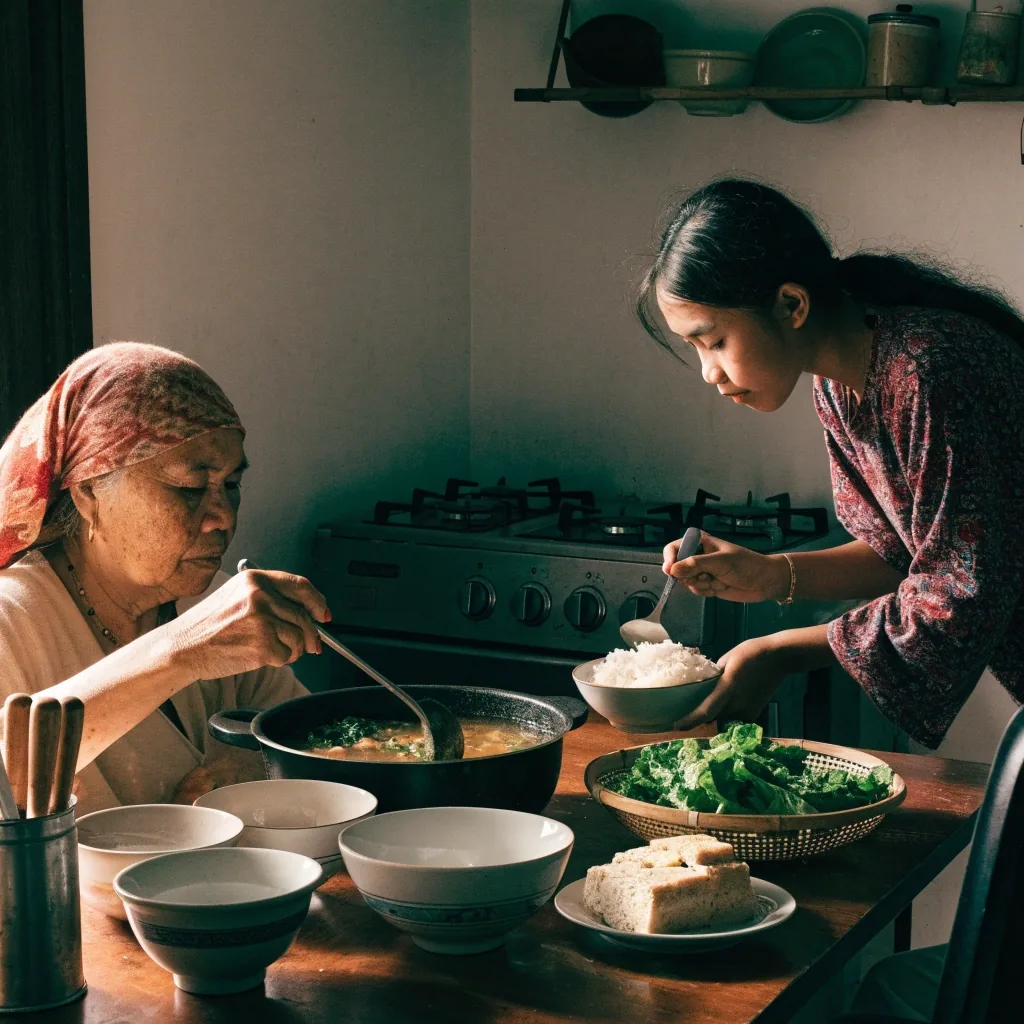
Cooking separately for every person is unrealistic. Most families cook one base meal and adjust portions or add sides. A plan for a household should account for children's smaller portions, older adults' softer textures, and anyone's allergies. One pot plus a few variations usually covers it.
-
1
Cook one base dish that everyone eats
A soup, a stir-fry, or a braised protein. This is the backbone of the meal and the part worth extra effort.
-
2
Adjust portions, textures, and sides per person
Smaller bowls for children, softer cooking for older adults, a little extra protein for someone who trained.
-
3
Keep allergen swaps separate, not improvised
If someone in the house reacts to a specific ingredient, plan the alternative dish on purpose instead of guessing at the table.
-
4
Write the week once, shop for it once
A short list on the fridge door beats deciding at 6 PM with the market already closed.
Shopping and preparation rhythm
Weekly shopping beats daily improvisation for most people. Buy vegetables and fruit in quantities you'll actually finish, and keep a few shelf-stable proteins on hand for the days you can't shop. Preparing a base, such as cooked rice or a batch of vegetables, shortens the distance between "hungry" and "eating" on busy evenings.

Shop once a week where you can
One planned trip with a list removes most of the "no food in the house" evenings.
Buy what you will finish
Vegetables and fruit spoil. A slightly smaller basket you actually cook beats a large one that wilts.
Keep shelf-stable proteins
Canned fish, dried legumes, and eggs rescue the nights when shopping didn't happen.
Prep a base, not a full menu
Cooked rice, a pot of greens, or marinated protein means dinner is a short step, not a project.
Store for the one who cooks next
Label containers by day so a partner or older child can plate without asking.
Meals out and takeaway
Eating out is part of life here, not a failure of the plan. Choose meals that include vegetables when you can, and keep portions sensible. If takeaway is frequent, your dietitian can help you pick the better options nearby rather than asking you to give them up.
A few practical habits
- Order one vegetable dish alongside the main whenever it's on the menu.
- Keep fried sides to one, not two, at the same meal.
- Water with meals, sweet drinks as a treat rather than the default.
- If you eat out three or more times a week, review that pattern in your consultation.
Hydration and daily movement
Food is one part of a healthier pattern. Adequate physical activity is included in Indonesia's public food guidance, and it doesn't require a gym; walking, cycling, and household activity count. Keeping water within reach through the day is a simple habit that supports everything else.

When a dietitian changes the plan
General guidance covers broad principles. It can't account for pregnancy, breastfeeding, a medical condition, or medication interactions. If your situation has a specific factor, a consultation is the better path — and a registered dietitian will build a plan around your needs and monitor how it goes.
Household circumstances
Who cooks, what budget is realistic, what the kids will actually eat, and how much of the week you eat away from home.
Health context a guide cannot cover
Pregnancy, breastfeeding, a diagnosed condition, or medication that changes how your body handles food.
Goals and pace
What you're trying to change, over what kind of timeline, and what "steadier" would look like in your normal week.
What your dietitian builds
A meal plan in your own foods and quantities, plus checkpoints to see what held up and what needs adjusting.
Questions first? Contact our team during working hours, Monday to Friday, 9:00 AM – 6:00 PM, or call +62 61 451 2233.
Building the habit over weeks
Change sticks when it's small and repeatable. This is the same incremental approach your dietitian would use in a consultation.
Pick one adjustment
Adding vegetables to dinner, or eating breakfast at all. One, not five.
Hold it before adding more
If it survived a busy week, it will survive the next one.
Stack the next change
Water at lunch, fruit for the afternoon gap, or a planned market trip. Choose one.
Review and adjust
What worked, what didn't, and what your dietitian would change next.
Common questions about meal planning
Do I have to give up rice, or my usual meals out?
No. Rice is normal in a balanced pattern — portion is the adjustable part. Meals out, including warung lunches, fit as long as vegetables and sensible portions show up across the day rather than in every single meal.
How long before I notice the plan fitting into my week?
Most people know within two to four weeks whether a change is realistic. That's the point of starting with one adjustment: if it isn't holding by week three, it isn't the right first change.
Does the guide replace a consultation?
It doesn't. The guide covers broad principles you can apply yourself. A consultation is what accounts for your specific situation — pregnancy, breastfeeding, a diagnosed condition, medication, or simply a week that doesn't cooperate with generic advice.
Can I plan for a whole family with different needs?
Yes — most households do. Cook one base dish, then adjust portions and textures, and plan allergen alternatives on purpose instead of improvising at the table. Your dietitian can help when more than one person has a specific need.
Next step: a plan built around your week
Register for a consultation and bring your notes, your usual meals, and the parts of the week where plans tend to fall apart. A registered dietitian will shape the plan around them.